
Contents
- 1 How to Structure Assignments in UK Universities: A Complete Guide
How to Structure Assignments in UK Universities: A Complete Guide
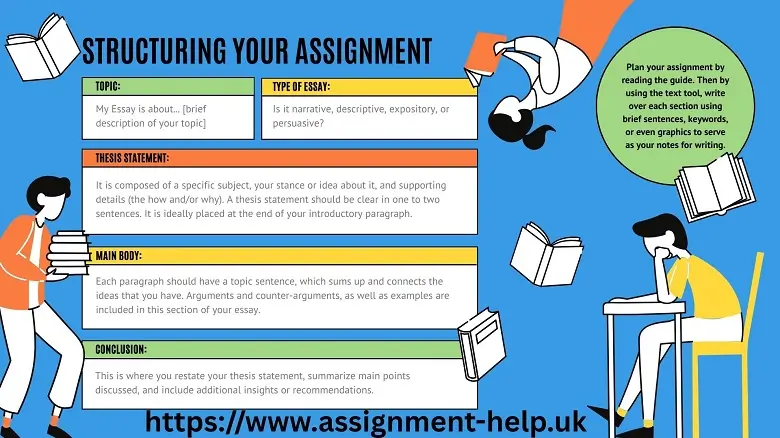
The role and importance of structuring an assignment is significant when it comes to scoring high. Universities in the UK like the University of Manchester, King’s College London, University of Edinburgh places significant importance especially on the structure of the assignment. A well-structured assignment is therefore crucial as it not only demonstrates your critical thinking, but also indicates your adherence to academic standards. Structuring an assignment as required by university is highly challenging for many students which is why they seek professional assignment writing support in the UK to make sure that their writeup meets the academic standards.
Let’s have a look at why the assignment structure matters in UK universities, an analysis of common types of assignments, the standard assignment structure followed, and specific tips from UK universities in efficiently structuring your assignment.
What is The Role of Structuring Assignments in UK Universities
Assignment structure is crucial in providing clarity, logical flow and academic rigor to the entire assignment. UK universities emphasise on the structure because it helps the reader understand the context of the assignment in a better way. As per the University of Leeds academic skills guide, clear structure is highly important for the readers, as it allows them to follow your argument and also enhances your writing as a proper structure makes the writeup persuasive and professional. The most important benefits from a good structure includes:
- Logical flow of arguments.
- Compliance with marking criteria.
- Easy to understand the context of the paper.
- Clear expression of analytical and critical thinking.
- Better readability for both the lecturers and the examiners.
Benefits of Structuring Your Assignment?
 Logical Flow of Arguments
Makes It Easy To Understand
Better Application of Critical Thinking
Types of Assignments in UK Universities
The structure of an assignment varies according to its types, as there are different types of assignments given to students in the UK to evaluate their learning potential from a course. The most common types of assignments are:
Essays:
Essays are the most common type of assignment given to students in universities like University of Birmingham. The standard structure followed in writing an essay is introduction, body and conclusion but it needs to be customised as per specific marking rubrics given along with the essay. With professional essay writing service provider for UK students, structuring an essay is not a challenge because the experts are well aware of how to maintain clarity and coherence while structuring an essay.
Reports:
Reports are required in courses like business, engineering or science by universities like University of Glasgow. They are highly factual compared to essays and have sections and subsections. Because of their technical nature, many UK students are dependent on UK report writing help for their business and engineering courses. The structure includes title page, table of content, executive summary, introduction, methodology, findings/results, discussion/analysis, conclusion and recommendation.
Case studies and reflective writing:
Case studies and reflective writing are utilised in courses like nursing, social sciences and psychology by Institutions like King’s College London. The structure includes executive summary, introduction, problem statement, analysis of findings, solutions and recommendations, conclusion, references and appendices. Reflective writing requires the application of models like Gibbs reflective cycle (1988) which is highly evident in nursing courses, leading to many nursing students seeking case study writing support.
Dissertations and thesis:
UK universities offering degrees at the master level require students to write dissertations. Some common examples include the University of Manchester, University of Bristol, the University of Nottingham etc. The structure followed in a dissertation includes title page, abstract, acknowledgement, table of content, introduction, literature review, methodology, findings, discussion, conclusion, references, appendices.
The Standard Assignment Structure Followed in UK Universities
Different assessment types as analysed above indicate a slightly different structure followed across each of them. However, the standard structure that most UK universities recommend is:
Although the above structure is commonly followed in case of reports, essays and case studies, the structure for the dissertation differs significantly. It includes introduction covering the background, aims and objectives, justification and structure of the research, literature review including a critical analysis of journal articles, methodology specifying the research design, sampling and data collection methods, data analysis highlighting the analysis of collected data, discussion of findings and conclusion and recommendations summarising the findings. The references include the sources referred to as appendices covering questionnaire and additional materials used.
Structuring Tips for Top UK Universities
As the structure of your assessment is important, different UK universities provide guidelines and suggestions that can be followed to enhance the overall structure. Some of the important tips include:
Using heading and subheadings:
By using headings and some headings, it is possible to make your work reader friendly and easier for them to understand. University of Southampton specifically requires the use of headings and sub heading while writing long reports.
Follow the word count:.
The wordcount is stated for different types of assessments in terms of word limit/page limit, and it is important to follow the limit specified while writing your paper. Universities like London School of Science (LSE) without marks for exceeding word limit.
Structuring Tips for Top UK Universities!!
Using headings and subheadings to make the text easier to understand.
Follow the word count to ensure all sections are adequately answered.
Master the academic tone to ensure compliance with UK universities.
Master the paragraph for logical flow of texts and arguments throughout.
Proofread and edit thoroughly to make sure that the paper is free of errors.
Master the academic tone:
Universities in the UK emphasises on using a formal academic language and it should be adequately considered while structuring different parts of your paper. Avoid using slang and always focus on using precise language by being specific and avoiding back statements.
Master the paragraph:
The paragraphs form the building block of your entire assignment and it is important to include well-structured paragraphs that are easy to follow. The PEEL paragraph is an important way of structuring paragraphs by giving emphasis on point, evidence, explanation and link.
Proofread and edit thoroughly:
One of the most important requirements while structuring your assignment is to make sure that it is free from any kind of error. UK universities expect a high standard of presentation, and by thoroughly proofreading and editing your paper, you can make your structure count and score well in your assignment.
Final Thoughts:
Structuring your assignment in a proper way as required by your University in the UK is important for academic success. Whether you are writing an essay on a business report at Warwick Business School, or a reflective journal from the University of Glasgow, a clear structure would help you in presenting your ideas in an efficient way.
The important points you should consider is to comply with your academic guidelines, follow the correct referencing as required by your university, and maintain a logical flow so that your lecturer finds it easy to understand your point of view and award you with good grades. Still if you need professional’s help in structuring your assignment, our UK based assignment help experts can help you in meeting our your university requirements for structuring and formatting your paper.
Frequently Asked Questions

I am Jonathan Wong, an education blogger and academic content specialist. With over five years of experience in academic content creation, I write about assignment strategies, study skills, and university life to help students globally in overcoming common academic challenges. I also share practical advice to support learners in their academic journey.


